
Fatigue failure occurs when a material cracks or fractures due to repetitive stress or cyclic stress caused by a time-varying load, such as wind loads. The cyclic loading that cause most fatigue failures are significantly below the normal intensity it would take for the material to yield under a static load. What cyclic stresses do is cause microscopic material imperfections or flaws to grow into cracks, typically forming in areas of stress concentrations or structural discontinuities. Then, the fatigue cracks propagate to the point of compromising the structural integrity of the material. The material will not be able to support the given load and will shear off. Material fatigue is irreversible. Therefore, it is important to check the susceptibility to fatigue of the construction materials after a storm event as they will likely be exposed to thousands of load cycles.
Failure Due to Fatigue — What It Means
Failure due to fatigue is the fracture of a component after many cycles of stress that were each, on their own, too small to break it. That is what separates failure by fatigue from overload failure: an overloaded part breaks once under a stress it could not carry, while a fatigued part breaks under a routine stress it had carried thousands of times before — because cracks grew silently between the first cycle and the last. In buildings, the usual drivers are wind gusts, equipment vibration, and thermal movement; in products and components, rotation and repeated handling.
When a component or connection breaks in service and the cause is disputed, our forensic engineering services examine the fracture surface to determine whether failure by fatigue — rather than a one-time overload, corrosion, or a manufacturing defect — is what the physical evidence supports.
The Main Contributors of Fatigue Failure
- The amount of time a specific time-varying load is effecting the building
- The number of cyclic loads the material experiences during the storm event
- Tensile and shear stresses that occurs with each cycle
- The effect of notches and the stress concentrations made by them
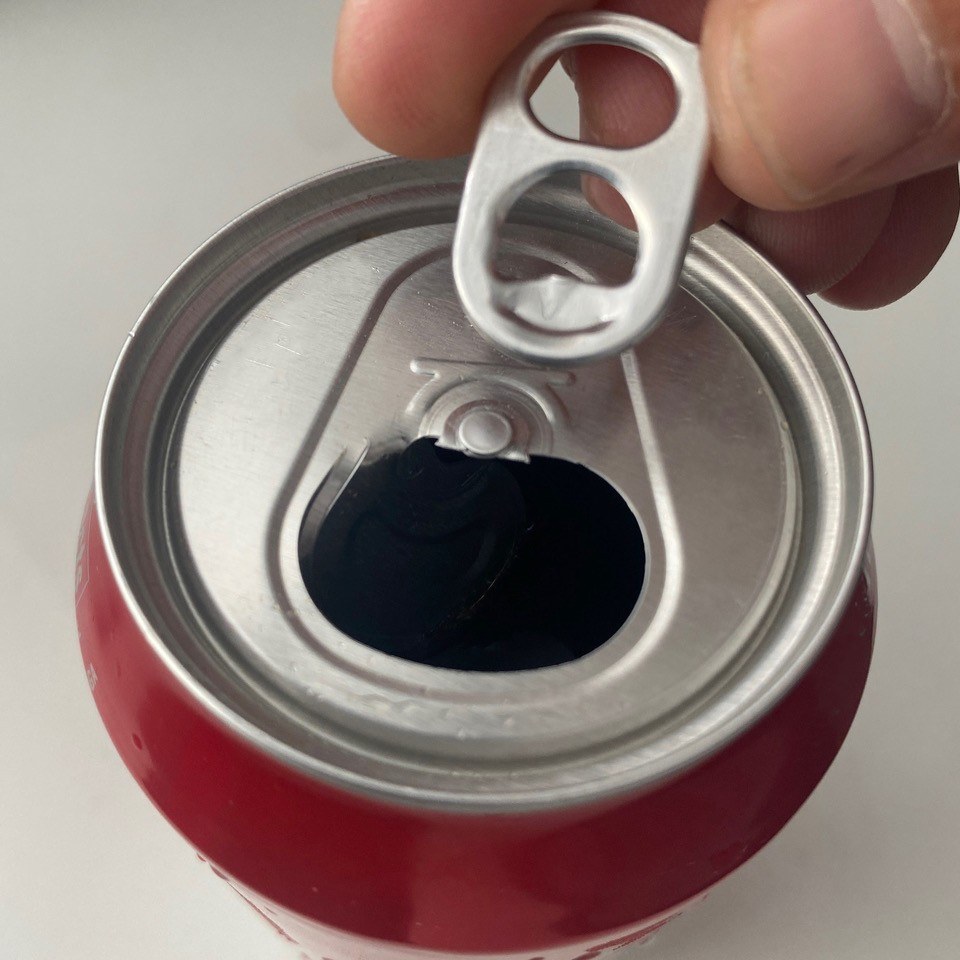
The Three Stages of Fatigue Failure — Represented in the Form of a Soda Can
Stage 1: Initiation
This initial stage, which is the most studied by researchers, represents the significant and irreversible changes in the material which is caused by the repetitive stresses. Cumulative damage is measured in how micro-changes accumulate over cyclic loading. The cracking begins in areas where the material is most stressed and has small imperfections. To put it in perspective, fatigue fractures are very small in this stage extending out no more than five grains at the point of origin.
Stage 2: Propagation
This stage is typically the most easily identifiable in fatigue fracture. As the material continues to experience time-varying loads causing cyclic loading, the microcracks extend further, growing perpendicular to the tensile stress. Here is where the number of cycles a material experiences during a storm event comes into play. The more cycles a material experiences the further the microcracks will extend diminishing the structural integrity of the material.
Stage 3: Failure
Fatigue failure results in this stage as the cracks continue to grow eventually diminishing the structural integrity of the material so greatly that complete failure occurs due to experiencing just one more load cycle. It is “the last straw” so-to-speak. Depending on the material, the environment and level of stress, the resulting fracture may be ductile, brittle or a combination of both.
Detecting Fatigue Failure
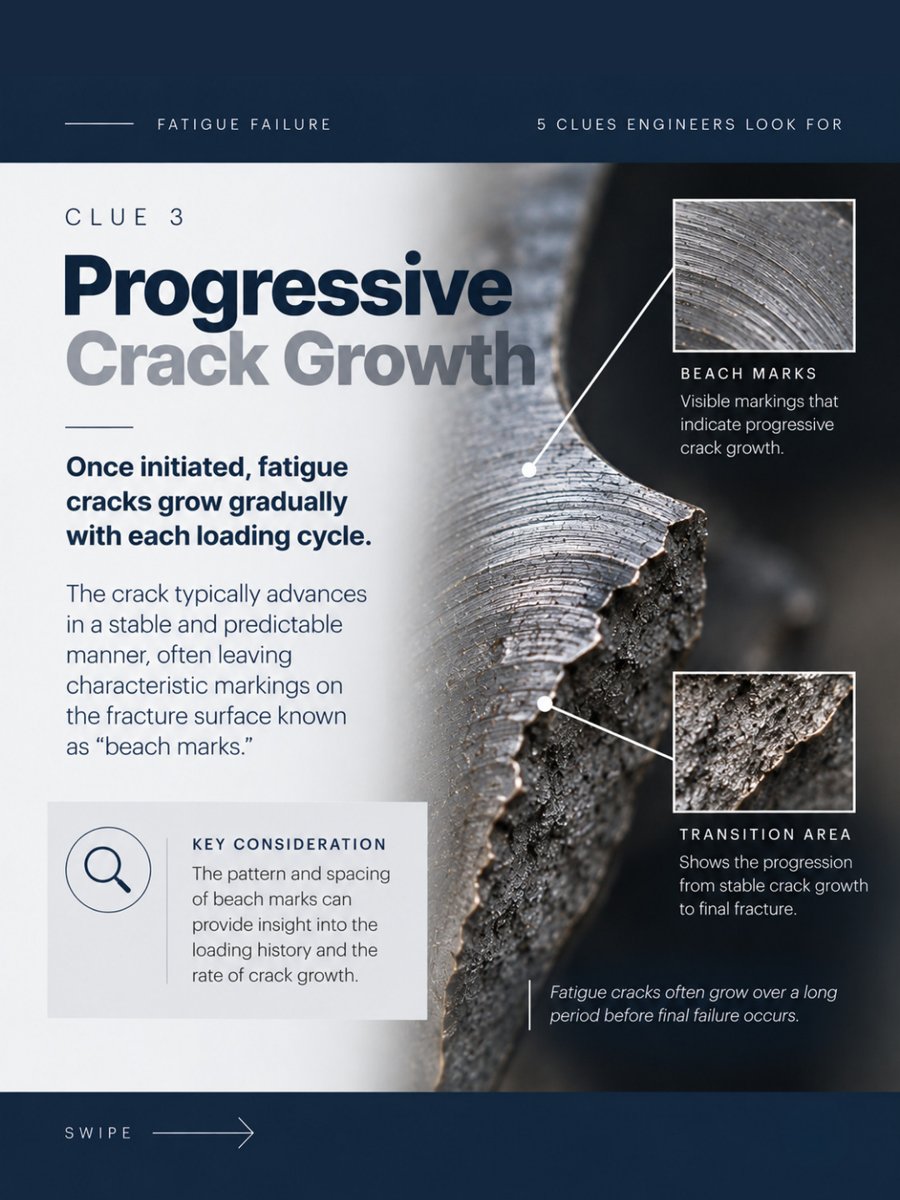
The striations of a break provide a good visual representation for identifying fatigue failure. Based on research performed, a fatigue crack continues to increase in size and diminish the structural integrity of the material with each cycle it experiences, approximately 5.7 x 10⁻⁷ m/cycle. Therefore, it can be concluded that a material that is exhibiting severe cracking caused by fatigue loading has experienced a substantial amount of cyclical movement and the structural integrity of that material has been compromised.
Luckily, while we have yet to find a way to prevent fatigue failure, we can count on science to help us predict the life expectancy of our designs. August Wohler is the most notable person of research in this field, known for his curves in stresses versus cycles (S/N). By simply plugging in the stress level of a structure into his curve’s formula, engineers can determine the expected lifetime of certain material and/or element. This is a great tool to help homeowners and insurance agencies understand the severe impacts fatigue failures have on a building and its components. Let our experts provide you with a comprehensive evaluation.
Related reading: 5 questions to ask before retaining a forensic engineering expert · our forensic practice.